Beyond the Chatbox: The Rise of the Autonomous AI Employee in 2026. If you want one prediction for this year then It is the year of the Chat agent
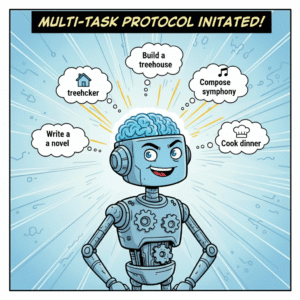
Post by Peter Hanley coachhanley.com
In my five decades of navigating the technological landscape, I have witnessed several “great shifts.” I saw the world move from the physical filing cabinet to the digital database, and from the landline to the smartphone. Each time, the transition followed a predictable pattern: first, we find a new way to store information; then, we find a new way to communicate it; and finally, we find a way for the technology to act on it.
In 2026, we have officially entered the “Action” phase. While the last two years were defined by the “Chatbot”—a tool you talk to—this year is defined by the Autonomous AI Agent. This isn’t just a technical upgrade; it is a fundamental shift in how businesses operate. We are moving away from software that merely answers questions and toward AI Employees that actually get the work done.
The Evolution: Why “Chatting” is No Longer Enough
To understand where we are going, we must look at where we’ve been. Traditional chatbots, even those powered by early LLMs, were essentially sophisticated responders. You asked a question, and the bot retrieved an answer. This was a massive leap forward for customer service, but it still required a human to take the next step. If a customer asked, “When is my delivery arriving?” the bot could provide the date, but it couldn’t reschedule the delivery for them.
Consequently, a gap remained between the conversation and the conversion. The “Autonomous Agent” has been designed specifically to close that gap. Unlike a chatbot, an agent is goal-oriented. When you give an agent a task, it doesn’t just look for a response; it looks for a solution.
The Secret Sauce: Agentic Reasoning and Tool Use
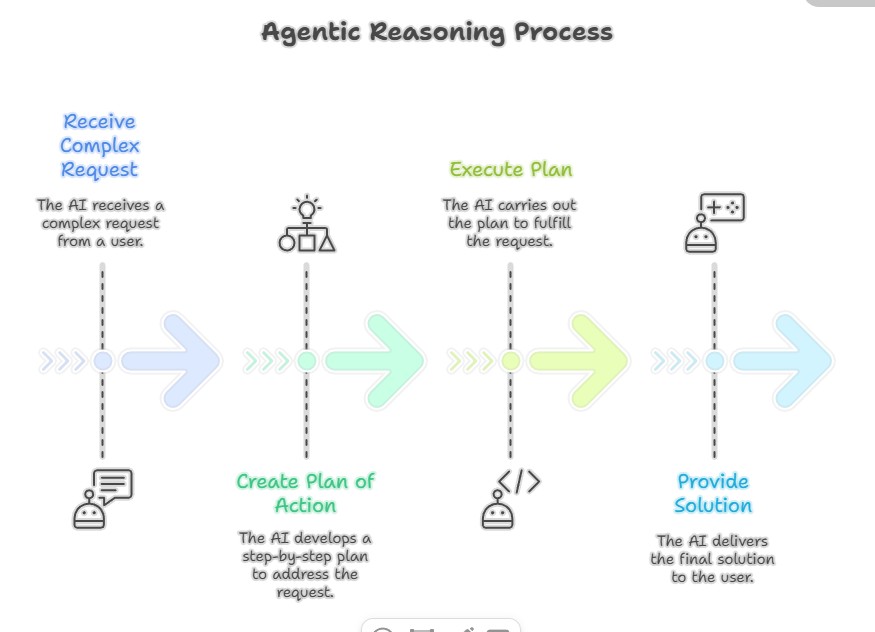
The big advance of 2026 is what we call Agentic Reasoning. In simple terms, this means the AI can now think in steps. When an Autonomous Agent receives a complex request, it doesn’t just guess an answer. Instead, it creates a “plan of action.”
For instance, if a lead tells your agent, “I need to book a consultation, but I only have my files in a Google Drive folder,” the agent understands it needs to:
- Access your calendar to find open slots.
- Provide the lead with a link to upload their files.
- Confirm the appointment once the files are received.
- Update your CRM with the lead’s details and the file location.
Moreover, this is made possible through “Tool Use.” Modern agents are connected to your business ecosystem—your email, your calendar, your CRM, and your internal databases. They aren’t just talking heads; they have “hands” in your digital systems, allowing them to perform administrative tasks with the precision of a veteran office manager.
Privacy and Accuracy: The No-Code Assurance
As we move toward autonomy, the stakes for accuracy become higher. This is why the mission at Select-ai.net is more critical than ever. For an agent to be truly autonomous, it must be grounded in your data.
In the early days of AI, there was a legitimate fear of “hallucinations”—where the AI would make up facts. By implementing a private, no-code agent grounded in your specific business manuals and price lists, you eliminate this risk. The agent doesn’t draw from the general chaos of the internet; it draws from the “Digital Wisdom” you have provided.
Significantly, this ensures that your data remains your own. In 2026, data sovereignty is a competitive advantage. When you build your agent on a private platform, you are building a secure asset that grows in value as you feed it more of your company’s unique intelligence.
Liberating the Human Element
Perhaps the most positive outcome of this shift is the effect on the human workforce. There has been much talk about AI “replacing” people, but my 50 years of experience tells a different story. Technology doesn’t replace humans; it replaces to-do lists.
By deploying Autonomous Agents to handle lead qualification, appointment setting, and routine technical support, you are liberating your human team from the “drudge work.” You are giving them the space to focus on strategy, creative problem-solving, and building genuine human relationships. Your human employees become the “Managers of AI,” overseeing a fleet of digital agents that handle the volume while they focus on the value.
Final Thoughts: The Futurist’s Perspective
We are no longer in the era of “waiting to see if AI works.” The 40,000+ agents built on our platform are living proof that the revolution is here. The question for 2026 is no longer “Should I have a chatbot?” but rather “Which of my business processes am I ready to automate with an agent?”
The transition from a passive website to an active, autonomous business is the biggest opportunity for SMBs in a generation. It allows the “little guy” to have the same operational power as a Fortune 500 company, without the Fortune 500 payroll.
At Select-ai.net, we’ve made this future accessible. No code, no expensive developers, and no data security fears. Just pure, functional autonomy.
The future isn’t something that happens to you—it’s something you build. Are you ready to hire your first autonomous agent?